Are you ready to make a significant impact in the community by supporting youth initiatives?
The NSW Police Force is offering one of its sought-after Project Roles in NSW Police, with an exciting opportunity for a dynamic Assistant Project Officer to join the Capability, Performance and Youth Command team. This role is ideal for individuals passionate about project management and youth welfare, providing a competitive salary and the chance to contribute to high-impact, purpose-driven projects.
As an Assistant Project Officer, you will play a key role in initiatives designed to disrupt youth pathways into the criminal justice system. Offering a base salary between $99,938 and $110,271, plus superannuation and additional benefits, this full-time temporary position is a standout opportunity to grow your career in a supportive, mission-focused environment.
Learn more about NSW Government recruitment and access a free cover letter template to get started.
Project Roles in NSW Police Table of Contents
Assistant Project Officer Salary and Overview
| Position Title | Assistant Project Officer |
| Organisation / Entity | NSW Police Force |
| Location | Sydney – South |
| Work Type | Full-Time |
| Base Pay | $99,938 – $110,271 |
| Closing Date | 17/08/2025 |
About the Assistant Project Roles in NSW Police Force
This Assistant Project Officer role offers the opportunity to contribute to a high-profile initiative within the NSW Police Force — the Youth Action Meeting (YAM) project. This is a position where your project coordination, research, and stakeholder engagement skills will directly support the safety and wellbeing of young people at risk.
As part of the YAM team, you will be involved in every stage of the project cycle — from research and analysis to reporting and implementation. YAMs bring together local agencies and organisations each month to collaborate, share resources, and develop strategies that prevent young people from entering, or becoming entrenched in, the criminal justice system. Your work will be grounded in a person-centred, strengths-based approach, focusing on positive outcomes and long-term community impact.
This role is well suited to someone with private sector experience in a project assistant, coordinator, or similar capacity who is ready to apply their skills to a purpose-driven government project. You will be part of the Capability, Performance and Youth Command, contributing to an initiative that makes tangible change at both an individual and community level.
The NSW Police Force is a diverse organisation with over 20,000 employees, including more than 4,000 administrative staff, all dedicated to maintaining law and order across New South Wales. Joining this team offers the chance to work within a large, impactful organisation that values diversity, inclusion, and positive community outcomes.
Perks and Benefits of Project Roles In NSW Police Force
If you’ve been supporting projects in the private sector and are ready to take the next step, this is your chance to bring your skills into a meaningful government role. You’ll join a team delivering projects that create real change in the community, giving you the opportunity to see your work contribute to a bigger purpose.
You’ll enjoy a competitive salary and benefits package, including flexible work options and wellness programs to support your lifestyle. This full-time temporary role (up to three years) offers the stability of government employment while still giving you room to grow and develop your career.
Based in Hurstville, with excellent access to public transport, shops, and amenities, this role is ideal for those with experience in project coordination, administration, or support roles who want to apply their expertise in a new and impactful setting.
With a hybrid work arrangement, you’ll get the best of both worlds – the collaboration and connection of working in the office, balanced with the flexibility and focus of working from home. It’s a career move that allows you to keep building on your skills while making a real difference.
Application Requirements for Project Roles in NSW Police
NSW Police Force Application Process
To be considered for one of the Project Roles in NSW Police, it’s essential that you follow the application instructions carefully. All documents must be submitted electronically via the I Work for NSW website. Please note that missing or incorrectly formatted documents may result in your application not progressing.
Your application should include:
- A cover letter of no more than two pages, highlighting your suitability for the role.
- An up-to-date resume detailing your skills, experience, and achievements.
- Responses to each of the Target Questions – max 500 words each, provided within the application form or uploaded as a separate document.
Taking the time to prepare a clear, well-structured application will give you the best chance of securing this opportunity.
To get started on your government project officer application – you can check out this free NSW Government Cover Letter Template.
What to Include in Your Assistant Project Officer Job Application
To apply for the Assistant Project Officer position, use your cover letter to introduce yourself and demonstrate how your experience aligns with the role. Ensure you use language from the job ad wherever possible.
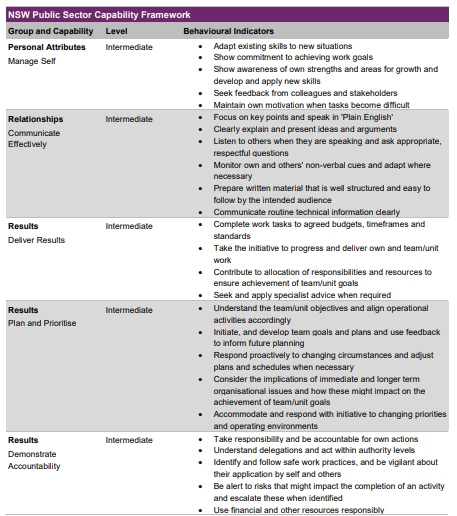
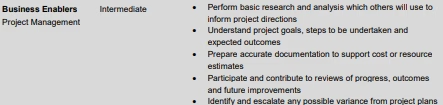
For this role, you must address all of the following capabilities:
- Manage Self – Intermediate: Adapt skills, stay motivated, and seek feedback to achieve goals and develop professionally.
- Communicate Effectively – Intermediate: Convey ideas clearly, listen actively, and tailor messages to suit the audience.
- Deliver Results – Intermediate: Take initiative to complete quality work on time and contribute to team objectives.
- Plan and Prioritise – Intermediate: Organise work efficiently, adjust to changing circumstances, and focus on key priorities.
- Demonstrate Accountability – Intermediate: Take ownership of actions, follow policies, and address risks responsibly.
- Project Management – Intermediate: Conduct research, prepare documentation, and support the delivery, monitoring, and review of project outcomes.
See screenshot of these full capabilities below from the role description.
Plus you will also want to include an example that relates to this essential requirement.
- Experience in research, analysis, reporting and administrative activities.
Target Questions for Assistant Project Officer
Think of targeted questions as interview-style questions that you get the chance to answer in writing as part of your application. Use the STAR method to craft your responses.
- Describe a situation where you have had to communicate a project or idea to multiple stakeholders. How did you do it and what did you consider in your preparation?
- Please describe your most recent experience in project management, including the methodology used to manage the project from initiation to completion. What was your specific role in the project, and what key project resources did you create or contribute to?
You’ll need to write examples that are no more than 500 words.
If you’re aiming to secure a job offer for project roles in NSW Police like this one, explore Priority Pass – your unlimited, all-in-one support program designed to help you land a government role faster.
Candidate Profile For Project Roles in NSW Police
Simon is an organised and detail-oriented professional with three years’ experience supporting projects in a mid-sized consultancy firm. In his current role as a Project Support Officer, Simon assists in coordinating multiple small-scale initiatives, undertaking research and analysis, preparing progress reports, and managing project documentation to ensure deadlines are met. Comfortable working across competing priorities, he has built strong skills in liaising with stakeholders, monitoring project milestones, and identifying potential risks early. His adaptability and initiative have made him a trusted team member in delivering quality outcomes in fast-paced environments.
Now seeking to transition into the public sector, Simon is drawn to the opportunity to apply his project coordination skills to a meaningful role within the NSW Police Force. With a proven track record in supporting projects from planning through to implementation, he brings a strong foundation in research, analysis, and administrative processes, as well as an ability to work collaboratively with diverse teams. Simon is eager to contribute to the Youth Action Meeting project, using his private sector experience to help deliver initiatives that improve community safety and the wellbeing of young people at risk.
Assistant Project Officer Example Cover Letter
Dear Hiring Manager,
I am excited to apply for the Assistant Project Officer position within the NSW Police Force. With a background in supporting private sector projects in a mid-sized consultancy, I have developed a diverse skill set in project coordination, research, and stakeholder engagement. I am confident my experience aligns closely with the key capabilities for this role and will allow me to contribute effectively to the Youth Action Meeting project.
I will bring to this role my ability to manage myself with adaptability and a commitment to professional growth. In my current position, I was tasked with supporting a new client project in an unfamiliar industry. I quickly adapted my existing analytical skills, researched the sector thoroughly, and sought targeted feedback from senior colleagues to refine my approach. By doing so, I delivered high-quality market research ahead of schedule, which informed the project’s strategic direction and earned recognition from the project manager for my proactive attitude.
I will also bring strong skills in communicating effectively. While coordinating multiple stakeholders for a digital transformation project, I ensured all updates were presented clearly, using plain language tailored to both technical and non-technical audiences. This included creating concise visual dashboards and facilitating progress meetings where I actively listened to concerns and adjusted communications accordingly. This approach kept stakeholders engaged, improved decision-making, and reduced the number of follow-up clarifications required.
I am highly motivated to deliver results and consistently take initiative to meet deadlines. On one project, I identified a potential delay due to a supplier bottleneck. I proposed an alternative sourcing strategy, worked with the procurement team to fast-track approvals, and ensured all related tasks were reprioritised. This allowed us to deliver the final report on time without compromising quality, strengthening client trust and satisfaction.
My ability to plan and prioritise is well established. In a period of high workload where I was supporting three concurrent projects, I developed a central tracking system to map deadlines, dependencies, and resource allocations. This system helped the team adapt quickly when priorities shifted, ensuring that the most urgent deliverables were addressed first without neglecting long-term commitments. The tool became a standard practice within the department.
I take pride in my capacity to demonstrate accountability. For example, when a data entry error I had made was discovered during a quality review, I immediately acknowledged it, investigated the cause, and implemented a double-check process for all future submissions. This not only prevented similar issues but also reassured the client of our commitment to accuracy and transparency.
Finally, I bring practical experience in project management. In one instance, I was responsible for preparing project documentation, tracking progress, and contributing to review meetings for a marketing system rollout. I conducted background research to support decision-making, compiled accurate cost and time estimates, and flagged a variance in the original timeline, enabling corrective action early. The project was delivered within the revised schedule, with improved stakeholder satisfaction due to transparent reporting.
I am eager to bring my private sector project support experience into the public sector, applying my skills to initiatives that improve community safety and the wellbeing of young people. I welcome the opportunity to discuss how my capabilities can contribute to the success of the Youth Action Meeting project.
Kind regards,
Simon
Target Question Response Examples For Project Roles in NSW Police
Describe a situation where you have had to communicate a project or idea to multiple stakeholders. How did you do it and what did you consider in your preparation?
In my role as Project Support Officer at a mid-sized consultancy, I supported a client’s digital transformation project that required regular updates to a diverse group of stakeholders, including technical specialists, senior management, and end users from different departments. The challenge was to ensure consistent understanding across audiences with varying levels of technical knowledge and differing priorities.
To prepare, I first mapped out the stakeholder groups, identifying their roles, interests, and the level of detail they needed. For technical staff, I knew they required detailed process changes and integration timelines; for senior management, the emphasis was on progress against milestones, budget implications, and risks; for end users, the focus was on practical impacts to their day-to-day tasks. I also reviewed prior project communications to understand what had worked well and where clarification had been needed.
I developed a tiered communication plan that included:
- Visual dashboards summarising project progress for senior executives.
- Detailed update reports for the technical teams.
- Clear, jargon-free presentations for end users to explain upcoming changes and training schedules.
When delivering the updates, I adapted my style to each audience. For senior management meetings, I used high-level summaries and emphasised strategic outcomes. In technical team sessions, I facilitated collaborative problem-solving discussions. For end-user briefings, I kept the language simple, included real-world examples, and allowed time for questions.
I actively listened to feedback during each session and noted recurring concerns. This input helped me adjust the messaging in subsequent communications and ensured stakeholder expectations were managed effectively.
The result was a noticeable improvement in engagement. Senior management reported greater confidence in the project’s progress, the technical team resolved integration issues more quickly due to clearer information sharing, and end users adapted more smoothly to the system changes. This experience reinforced my belief in the importance of tailoring communications to audience needs and using structured preparation to ensure clarity and trust.
Please describe your most recent experience in project management, including the methodology used to manage the project from initiation to completion. What was your specific role in the project, and what key project resources did you create or contribute to?
My most recent project management experience was in supporting the rollout of a new client relationship management (CRM) system for a national retail client. The consultancy I worked for adopted a hybrid project management methodology, combining Agile for iterative system testing with elements of Waterfall for overall timeline control.
At initiation, I contributed to the project charter by collating requirements from various client departments and ensuring they were documented clearly. I supported the project manager in preparing the high-level project plan, defining key milestones, and scheduling stakeholder workshops.
During the planning and execution phases, I took responsibility for maintaining the project schedule in Microsoft Project, tracking deliverables, and preparing fortnightly progress reports. I conducted research to benchmark CRM system features and provided cost-comparison data to inform decision-making. I also prepared training guides and quick reference materials for end users, ensuring these were reviewed by subject matter experts before release.
One of my key contributions was creating a risk register that logged identified risks, assigned ownership, and tracked mitigation actions. This tool was used in every project meeting and became essential in avoiding potential delays—particularly when supplier lead times threatened to impact system testing.
I also coordinated system testing sessions, ensuring feedback was documented and prioritised for fixes. In Agile sprint reviews, I presented collated test results to the project team and client representatives, helping to drive consensus on the next sprint’s focus.
The project concluded with the system going live on the planned date, with user adoption exceeding initial expectations due to the quality of training materials and proactive stakeholder engagement. The client later provided feedback noting the clarity of documentation and the smoothness of the rollout as key success factors.
Through this project, I reinforced my skills in structured planning, documentation, and stakeholder coordination, and demonstrated my ability to adapt to hybrid methodologies while ensuring consistent delivery of project outcomes.
How to Use the STAR Method for For Project Roles in NSW Police
The STAR method is a simple, structured way to present examples in job applications and interviews. It ensures your answers are clear, complete, and show the panel exactly how you applied your skills in real situations.
STAR stands for:
- Situation – Describe the context and background of the example.
- Task – Explain your specific responsibility or objective.
- Action – Detail the steps you took to complete the task, focusing on what you did.
- Result – Outline the outcome, emphasising achievements, improvements, or lessons learned.
When using STAR, keep your explanation concise but detailed enough to show your skills in action. Focus on your contribution rather than what the team did collectively.
Example from Target Question Response
Situation: While working as a Project Support Officer in a mid-sized consultancy, I was involved in a client’s digital transformation project. The role required communicating updates to multiple stakeholder groups, each with different priorities and levels of technical understanding.
Task: My responsibility was to ensure every group received information in a format they could understand and act on, maintaining engagement and clarity throughout the project.
Action: I mapped out stakeholder groups to identify their needs, then developed a tiered communication plan. For senior management, I created visual dashboards highlighting progress and risks. For technical teams, I prepared detailed reports with integration timelines. For end users, I delivered jargon-free presentations using practical examples. I actively sought feedback after each communication to improve future updates.
Result: This tailored approach improved stakeholder engagement, reduced clarification requests, and ensured smoother adoption of the new system. Senior management reported greater confidence in the project’s progress, and technical teams resolved integration issues more quickly.
Learn more about the STAR method to enhance your application.
Get Your Assistant Project Officer Application Ready Now
Have you been supporting corporate projects that look good on paper but feel empty in reality? Tired of chasing deadlines that don’t change anything for the people who matter? You’re not alone — and you don’t have to keep doing it.
With Priority Pass, launching late August, you can pivot into a meaningful, six-figure government role like a Senior Project Officer sooner than you think. It’s a premium, fully supported program designed for people who want their project skills to actually make a difference. Every step is handled by someone who knows exactly how to get you in front of decision-makers and through the door.
Here’s what’s included:
- Unlimited, professionally written applications tailored to nail every selection criterion.
- STAR method coaching with real examples drawn from your own career.
- Weekly job matching so you only see roles worth your time.
- Personalised interview prep and honest feedback to build confidence.
- Ongoing CV updates to keep you ahead in a competitive market.
- Direct, unlimited email access for answers when you need them.
I only work with five clients at a time so the process stays personal, strategic, and hands-on. Applications open late August, and spots will go fast.
Click here to join the Priority Waitlist and be first in line. Don’t let another year of chasing meaningless milestones go by when you could be building a career that genuinely helps people.